

Updated
You can take a relationship concern seriously without proving that your partner is “toxic.” That informal label can describe many different situations. If you are considering leaving, start with what is happening, what support is available and whether discussing your plans could put you at risk.
Separate an unhappy relationship from abuse
Different priorities or an unsatisfying relationship can be reasons to end things. Threats, intimidation, isolation and control need a different response from an ordinary disagreement about plans. The Office on Women’s Health guide to emotional and verbal abuse describes harmful behavior that may occur without physical injury, including humiliating someone, restricting their contacts and controlling their decisions.
Do not use mood changes or an uncommunicative moment to diagnose another person. Equally, do not dismiss frightening behavior because no one has been hit. You can describe the specific incident to a trusted professional or advocate and ask for help understanding your options.
Being mistreated is not a failure to communicate well enough. The Office on Women’s Health guidance on leaving abuse makes clear that the person using abuse is responsible for that behavior. You do not have to divide responsibility equally or fix the other person before seeking help.
Let safety shape the way you make plans
If you feel safe ending an ordinary relationship, you might prepare a clear statement of your decision and think through shared arrangements. You do not need a diagnosis, a psychic prediction or your partner’s agreement that the relationship has run its course.
If you fear retaliation, being followed, threats or having access to money or transport cut off, avoid treating a face-to-face breakup as an obligation. Leaving abuse can bring additional risk. A domestic-abuse advocate can help you consider your circumstances before you announce a plan or take a step that changes your partner’s access to you.
A plan is support, not a deadline. You can ask for help while undecided, while staying, or after leaving. If you are in immediate danger, contact local emergency services; do not delay getting help to collect belongings.
Three planning conversations to have with support
The following questions organise practical concerns from the Office on Women’s Health guidance. Adapt them with someone who understands your situation. Keep any notes only where they can be stored safely.
Who can help without sharing your plans?
Consider a trusted person, an advocate or a healthcare professional you can speak with privately. Explain how they can contact you safely. Ask what local help actually exists rather than assuming a friend, shelter or service can provide transport or accommodation at short notice.
What essential access needs planning?
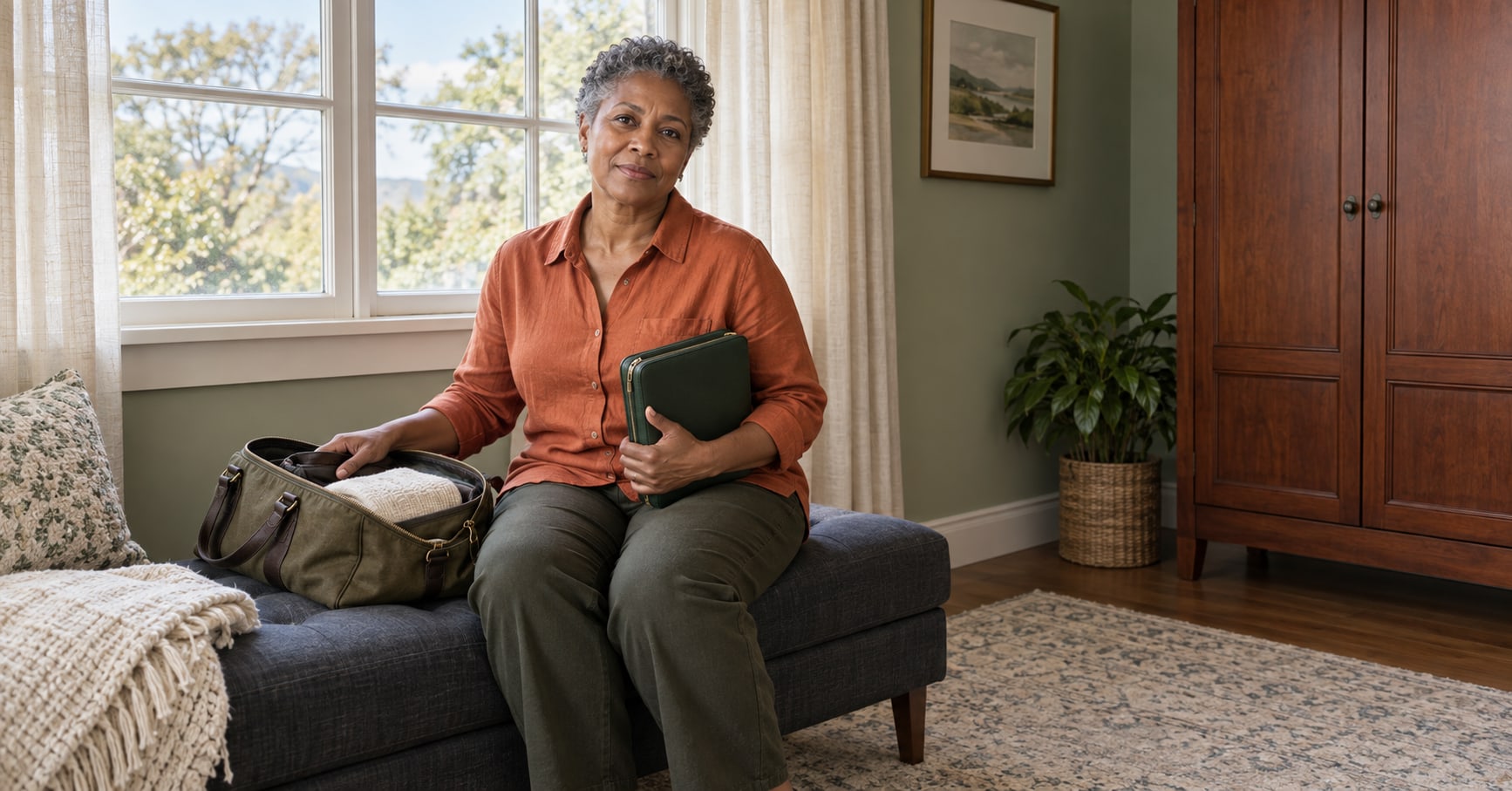
Discuss medicines, identification, keys, important contact details and access to money or documents. Include children’s or other dependants’ needs. Gather items only if doing so is safe; a perfectly packed bag is not a condition for receiving support.
What would the next day require?
Think about a place to stay, transport, work, school, ongoing care and how to communicate. Ask an advocate which local services can help. Get qualified local advice for housing, custody or other legal questions; an article cannot determine those rights for your situation.
Consider digital access alongside physical arrangements
Shared devices and accounts may reveal searches, messages or plans. The Office on Women’s Health recommends using a safer computer or phone when researching help if your partner might monitor your activity. Closing a page is not the same as removing its browsing records.
Tell an advocate if you are worried about tracking or shared-account access. The Safety Net Project’s phone safety guidance cautions that changes can alert the person monitoring you. Consider that possibility within your wider safety plan. Do not assume that one password change resolves every form of monitoring.
Mixed feelings do not cancel your choices
You might miss someone, feel relief or remain unsure. You do not have to make those feelings agree before discussing a practical concern. Our guide to relationship intensity, attachment and safety explains why strong attachment does not establish that a relationship is safe.
If you have already separated, closure after a breakup can help you consider the questions that remain. Contact or a final explanation from an ex is not something you have to obtain before taking care of yourself.
Find help that fits where you live
In the United States: the National Domestic Violence Hotline is available at 1-800-799-7233. The Office on Women’s Health links to support and shelter information. Ask services about their current availability and what they can offer. Outside the United States, contact a domestic-abuse organisation in your country.
You deserve support without having to minimise the harm, share blame for someone else’s abuse, or commit to a decision before you are ready.