


The foundation of a strong relationship is communication, but the first thing that usually gets destroyed in stress, emotional overwhelm, or routine is communication. Even couples that really care about each other can feel misunderstood, disconnected, or unheard as time goes on.
The great thing is that communication isn’t something you have or don’t have; it’s a skill you can develop by practicing and being more aware. When couples commit to intentional changes, even small shifts in how they listen and respond can create change that can strengthen or break a relationship. As time goes on, making small improvements can turn everyday interactions into opportunities to connect with your partner instead of being in conflict.
Communication exercises are designed to help couples reduce misunderstandings, build empathy, and create stronger emotional bonds that can support the relationship when times are good and when times are stressful.
Communication Can Break or Make a Relationship
Here is why communication can break or make a relationship:
Communication Barriers
Communication problems are more common than people realize. They usually don’t come from not loving your partner, but from differences in communication styles, emotional habits, and even expectations that aren’t talked about. Here are some of the most common communication barriers:
- Lack of active listening: One or both partners are distracted or focused on responding instead of understanding.
- Defensiveness: When someone feels criticized, this can lead to more problems instead of a resolution.
- Assumptions: This gets rid of curiosity and causes misunderstandings.
- Emotional withdrawal: One partner shuts down instead of choosing to engage in the conversation.
- Criticism: The focus is on the person instead of the issue, and this creates distance instead of connection.
Even though these patterns might seem small, as time goes on, they create emotional distance and reduce the feeling of being in a partnership.
What Causes Miscommunication?
Everyone has their own communication style, and partners bring this into their relationship. These styles can be shaped by their upbringing, past experiences, and emotional conditioning. When one communication style feels natural to someone, it can be overwhelming or confusing to another person.
One partner, for example, might want to talk through their problems immediately, but the other partner might need time to process the situation before they respond. Without being aware of these different communication styles, these differences can cause misinterpretation and frustration.
Stress in the world can also play a big role in misunderstanding. Financial concerns, family responsibilities, work pressures, or even a lack of sleep can impact how people communicate with each other. When stress is high, it can cause patience to be lower, and the reactions can become less thoughtful and more emotional.
Once couples learn to recognize these influences, it can help them to understand each other better instead of blaming one another. This is a big way to improve communication.
Communication Exercises Make a Difference
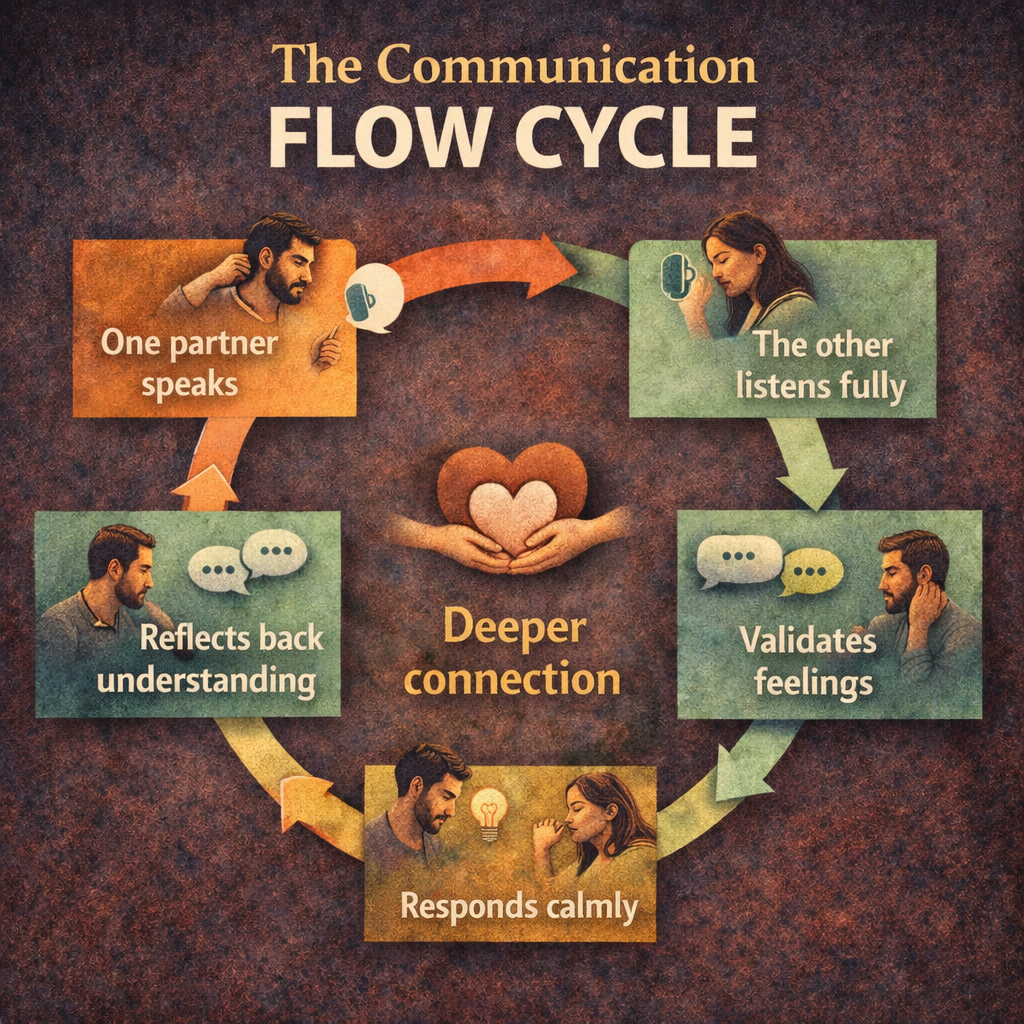
Communication exercises can feel a little awkward at first, but they’re helpful in moments where conversations usually go sideways.
Instead of reacting out of habit, they help you slow things down and be more intentional. As time goes on, couples will start to:
- Take a step back instead of reacting immediately.
- Say what they mean in a clearer, calmer way.
- Respond with understanding instead of jumping to conclusions.
At first, it might feel like you’re “trying too hard,” but with consistency, it starts to feel more natural. The goal isn’t about being perfect, but it’s about creating better habits over time.
What Practicing Helps
When communication becomes more intentional, it doesn’t just help one conversation, but it starts to change the relationship overall. You might start to notice things like:
- A stronger sense of emotional comfort with each other.
- More openness without fear of being shut down.
- Fewer arguments that spiral out of control.
- A deeper feeling of being on the same team.
It doesn’t mean problems disappear, but it does make it easier to work through together.
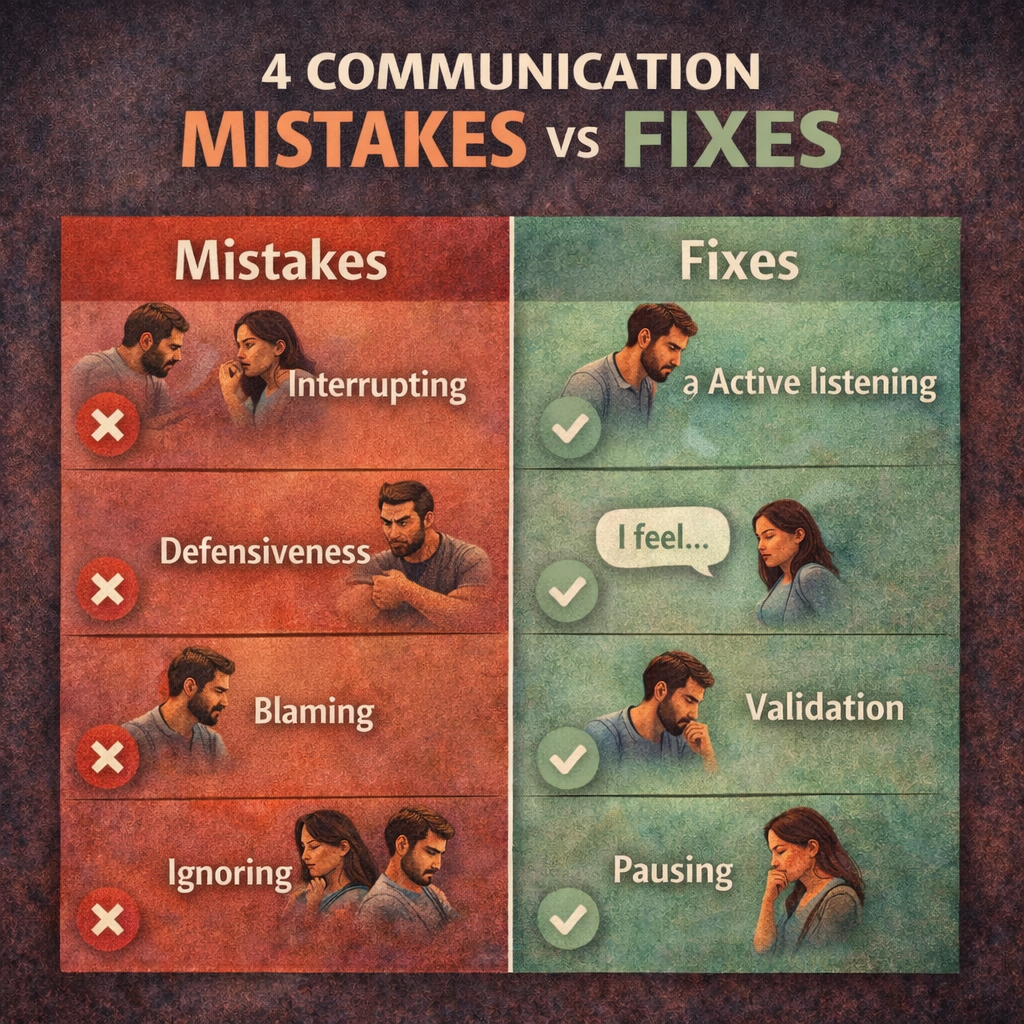
Creating a Place of Open Communication
A healthy communication space is one where both people feel safe enough to be honest. That means things like:
- You’re able to speak without being cut off.
- Your feelings aren’t brushed aside or made to feel small or insignificant.
- You don’t feel like being honest will turn into a bigger issue.
This kind of space doesn’t just happen, but it’s built through how you treat each other during conversations.
How to Build Trust
It comes down to small behaviors that are consistent. It includes things like:
- Listening fully instead of thinking about what you’ll say next.
- Letting your partner feel heard, even if you don’t completely agree.
- Choosing your words carefully instead of reacting emotionally.
- Staying engaged instead of shutting down.
When this becomes the norm, it’s easier for both people to open up without hesitation.
Skills to Help Make Communication Stronger
Here are some skills that can help to make communication stronger:
Really Listening to Your Partner
A lot of people think they’re listening, but they’re really just waiting for their turn. Real listening looks like this:
- Giving your full attention.
- Not interrupting.
- Making sure you actually understand what’s being said.
Sometimes, even repeating it back in your own words can help avoid misunderstandings. When someone feels heard, it changes the entire tone of the conversation.
Being Clear in What You’re Saying
A lot of frustration in relationships comes from expecting the other person to “just know.” Instead of hinting or assuming, being direct makes things easier for both of you.
For example:
- “I’ve been feeling a little disconnected lately. Can we spend more time together?”
This works better than saying:
- “You never make time for me.”
Clear communication lowers defensiveness and gives your partner a real chance to show up for you.
12 Communication Exercises for Couples to Try
Here are 12 communication exercises for couples to try:
1. Stress-Reducing Conversations
Take time each day to talk about things outside of the relationship that are causing stress instead of focusing on problems inside of the relationship. This helps to:
- Stop outside stress from affecting the relationship.
- Builds teamwork.
- Creates emotional support without there being pressure.
2. Active Listening
You and your partner take turns talking and listening without interrupting each other. The listener will then say back to their partner what they heard to make sure there is clarity and emotional validation.
3. Reflective Talking
Rephrase what your partner said in your own words. This helps to show if there are any misunderstandings and puts in a real effort to understand one another.
4. Using “I” Statements
Express what you’re feeling without blaming your partner. This helps to get rid of defensiveness and creates a safe place for open and honest communication.
5. Asking Open-Ended Questions
Asking open-ended questions encourages deeper conversation by asking questions that require a thoughtful response instead of just asking a yes-or-no question. This helps to uncover things like feelings or different points of view that might otherwise be hidden.
6. The Time-Out Reset Conversation
If emotions are too high or overwhelming, pause the conversation. By coming back to the conversation later, it allows both you and your partner to communicate in a calm and effective way.
7. Weekly Check-Ins
Each week, take time to talk about the relationship. Be intentional in what you’re asking and what you’re saying. Talk about what’s going well in the relationship and what needs attention, and discuss how you and your partner are both feeling.
8. Emotional Validation
Listen to what your partner is feeling and acknowledge their feelings without correcting or disagreeing with them. By validating your partner, it allows them to feel supported and understood, even if you don’t agree with them.
9. Be Positive with Each Other
When your partner comes to you for attention or to have a stronger connection, respond positively to them. Even though these are small things, they can build long-term emotional closeness.
10. Appreciation Practice
If your partner does something small or something big, express your appreciation regularly. By expressing appreciation, it shows positivity and helps to keep the emotional connection strong.
11. The Perspective Change
When your partner tells you what they’re feeling, try to describe their perspective in an accurate way. This helps reduce misunderstandings and builds empathy for what your partner is feeling.
12. “Pause Before Responding.”
Before you ever respond to what your partner says, take a moment to pause. By doing this, it changes your reaction into a thoughtful response and helps to improve overall communication between partners.
Why These Things Work
These different things work because they stop the automatic reactions and replace them with doing intentional behaviors. For example, instead of couples reacting defensively or withdrawing, they start to:
- Listen better.
- Understand each other’s point of view.
- Respond with love and care.
As time goes on, these things will help to strengthen the relationship and make communication more effective.
Challenges with Communication
These are some common communication challenges:
-
A Struggle to Engage
Not everyone is able to start communicating deeply right away. Some people need to take time to build trust before they’re able to be more open.
By being patient and consistent in talking to one another, it creates a safe space that encourages gradual openness to happen.
-
Getting Rid of Old Patterns
When communication habits are deeply ingrained, it can take time for someone to change. It’s normal to go back to old patterns here and there, but putting in consistent effort will slowly create healthier changes.
-
Honesty and Kindness
In order to be able to communicate healthily, couples need honesty and sensitivity to one another. Being clear and honest without being harsh creates strength and trust in the relationship.
Final Thoughts: Improving Communication
You don’t have to be perfect in order to have better communication with your partner, but you need to be aware, put in effort, and be consistent. Try the exercises above and practice them regularly while being patient.
As time goes on, making small changes can change your relationship into one where both you and your partner feel supported, understood, and connected.
Frequently Asked Questions
1. Why are communication exercises important for couples?
Communication exercises help couples slow down, listen more carefully, and respond with greater empathy. They create structure around difficult conversations, which can reduce misunderstandings and help partners feel more heard, respected, and emotionally connected.
2. Can communication exercises really improve a relationship?
Yes. When couples consistently practice healthy communication habits, they often improve understanding, reduce tension, and strengthen emotional intimacy. The key is regular practice rather than expecting one conversation to fix everything.
3. What is the best communication exercise for couples to start with?
Active listening is often one of the best places to start. One partner speaks while the other listens without interrupting, then reflects back what they heard. This simple exercise helps both people feel seen and reduces reactive communication.
4. How often should couples practice communication exercises?
It depends on the couple, but short daily or weekly practice usually works well. Even a 10-minute check-in can help couples stay connected, process stress, and prevent small frustrations from building into larger conflicts.
5. What is active listening in a relationship?
Active listening means giving full attention, staying present, avoiding interruptions, and responding in a way that shows understanding. It is not just waiting for your turn to talk. It is listening with the goal of understanding your partner more clearly.
6. Why do couples struggle to communicate even when they love each other?
Love does not automatically create strong communication skills. Stress, defensiveness, old arguments, different communication styles, and emotional triggers can all interfere with healthy dialogue, even in caring relationships.
7. Can communication exercises help during conflict?
Yes. Communication exercises can help couples pause escalation, speak more respectfully, and focus on understanding instead of winning. They are especially useful during conflict because they give both partners a more grounded way to respond.
8. What are “I” statements and why do they matter?
“I” statements help people express feelings without sounding overly accusatory. For example, saying “I feel hurt when we stop talking” is often more constructive than saying “You always shut me out.” This shift can lower defensiveness and improve the tone of the conversation.
9. What is a daily check-in for couples?
A daily check-in is a short conversation where partners reconnect, share what is on their minds, and ask how the other person is doing. It can include appreciation, stress from the day, emotional needs, or anything that helps both people feel connected and informed.
10. Can communication exercises help prevent resentment?
Yes. Resentment often grows when feelings are ignored, dismissed, or left unspoken for too long. Regular communication exercises make it easier to address issues earlier, before they become deeper emotional wounds.
11. Should couples only use communication exercises when something is wrong?
No. These exercises are most effective when used both during calm periods and during stressful ones. Practicing during good moments helps build habits that are easier to use when tension or conflict shows up later.
12. What if one partner is better at communicating than the other?
That is common. Communication skills can develop at different speeds, and one partner may feel more comfortable expressing emotions than the other. What matters most is willingness, patience, and creating a safe space for both people to grow.
13. Can nonverbal communication affect a relationship too?
Yes. Tone of voice, facial expression, body language, eye contact, and physical distance all affect how messages are received. Sometimes the nonverbal message feels stronger than the actual words being spoken.
14. How can couples communicate better during stressful times?
It helps to slow down, choose the right moment, limit distractions, and focus on one issue at a time. During high stress, couples often benefit from shorter conversations, gentle language, and clear efforts to validate each other’s feelings.
15. What is validation in relationship communication?
Validation means showing your partner that their feelings make sense from their point of view, even if you do not fully agree. It does not mean you approve of everything. It means you are acknowledging their emotional experience with respect.
16. Can communication exercises increase emotional intimacy?
Yes. When couples speak honestly, listen carefully, and respond with empathy, they usually feel closer. Emotional intimacy grows when partners feel safe enough to be open and know they will not be mocked, ignored, or attacked.
17. What should couples avoid during communication exercises?
It helps to avoid interrupting, sarcasm, blame, mind-reading, scorekeeping, and bringing up too many issues at once. These habits can make conversations feel unsafe and quickly undo the benefits of the exercise.
18. How long does it take for communication exercises to start working?
Some couples notice small changes quickly, especially when they start listening more intentionally. Larger changes usually take time and repeated practice. Communication tends to improve through consistency rather than instant breakthroughs.
19. When should couples consider therapy instead of only doing exercises at home?
Couples may want professional support if conversations always turn into fights, one or both partners shut down completely, trust has been damaged, or the same issues keep repeating without progress. Therapy can provide guidance and emotional safety when home practice is not enough.
20. What is the main goal of communication exercises for couples?
The goal is not perfect communication. It is better connection. These exercises help couples understand each other more clearly, handle stress more gently, and create a stronger emotional bond through healthier ways of talking and listening.