


Creating an emotional connection with a man isn’t about memorizing exciting text, manipulating, or trying to be the perfect woman. Real emotional intimacy happens when two people feel emotionally safe and authentic with each other.
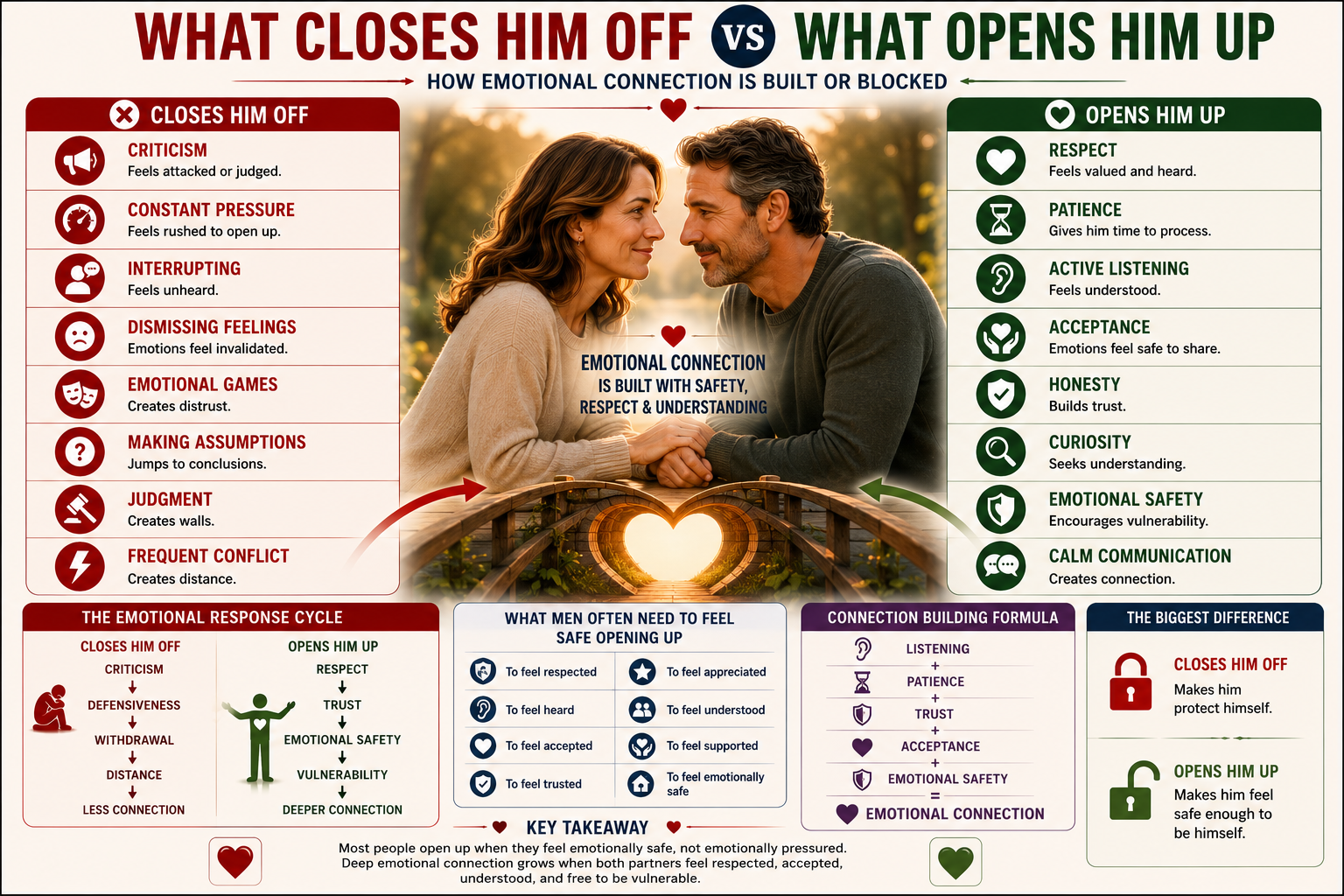
A man bonds with someone when he feels understood, appreciated, accepted, and trusted. Men also feel safe when they’re able to express themselves openly. No matter what modern dating trends suggest, emotional connection doesn’t normally grow through performance or perfection, but through honesty, curiosity, consistency, vulnerability, and presence.
Sometimes women unintentionally sabotage emotional intimacy because they think that they need to appear unbothered, avoid vulnerability, always avoid vulnerability, appear confident, and never express their own needs. But emotional walls don’t get rid of pain, but they also block intimacy.
The strongest emotional bond can happen when someone feels they are seeing the real you and not just the carefully managed you.
Emotional Connections Matter
Physical chemistry creates excitement, while emotional connection creates attachment. You might start a relationship based on attraction, but emotional intimacy is what keeps the relationship healthy in the long term.
According to the Greater Good Magazine at UC Berkeley, research in relationship psychology shows emotional responsiveness and attunement are some of the strongest ways to know if there’s relationship satisfaction and emotional closeness.
Most people soon realize they didn’t fall in love because someone was just attractive, but because they felt emotionally safe, seen, accepted, and understood.
A man might have a deeper emotional closeness when the conversations feel real, he feels trusted, appreciated, and the connection feels effortless without him needing to constantly impress his partner.
This is why an emotional connection can outlast any kind of physical chemistry.
Women and the Struggle to Have Emotional Intimacy
Some women are taught that being vulnerable can be dangerous, so instead of showing emotions, they will suppress their emotions, pretend everything is fine, avoid being too honest, focus on being cool, and self-protect. This kind of emotional protection creates distance, and you can’t build emotional intimacy when you’re hiding emotionally.
This is often seen in women who are:
- Independent.
- Perfectionists.
- Fearful of rejection.
- Self-protectors.
- Anxious attached.
Some women feel that if they show too much emotion that their partner will lose attraction, but the truth is that healthy emotional intimacy needs emotional visibility. People can connect to others who are authentic and not perfect.
Vulnerability Creates Bonds
One myth about vulnerability is that it makes a person look weak. The truth is that healthy vulnerability isn’t emotional chaos, but emotional honesty. Vulnerability can sound like things like:
- “I’m nervous.”
- “That actually hurt my feelings.”
- “I’ve had a stressful week.”
- “I really enjoy spending time with you.”
- “I’m trying to open up more emotionally.”
- “I’m scared too sometimes.”
These statements can create emotional trust because they tell their partner that they’re safe enough to be real with them.
According to Brené Brown Research & Books, they show that vulnerability is one of the strongest foundations of intimacy, trust, and a meaningful connection. Emotionally healthy men aren’t pushed away by emotions or by authenticity, but are usually drawn into a deeper connection because it creates emotional safety.
1. Trying to “Perform” Often Blocks Real Connection
A lot of people approach dating like they’re trying to pass some emotional test without even realizing it. Performance mindset usually focuses on things like:
- Saying the perfect thing.
- Looking attractive enough.
- Avoiding mistakes.
- Never seeming “too emotional.”
- Trying to win someone’s attention.
But a real emotional connection usually works differently. Connection is more about:
- Emotional honesty.
- Emotional presence.
- Curiosity.
- Authenticity.
- Compatibility.
Trying too hard to appear perfect often creates emotional pressure instead of closeness. Ironically, people usually connect more deeply with someone who feels emotionally real instead of emotionally polished.
2. Surface Conversations Rarely Create Deep Intimacy
A lot of conversations stay emotionally shallow because people only exchange information instead of emotional meaning. Surface-level conversations usually sound like:
- “What do you do?”
- “Where are you from?”
- “What are your hobbies?”
Emotionally connecting conversations explore things like:
- Feelings.
- Emotional experiences.
- Motivations.
- Personal growth.
- Meaning.
For example, ask questions like this:
- “What music do you like?”
- “What kind of music feels emotional for you?”
Questions like that invite emotional openness instead of simple factual answers. People usually feel emotionally connected when they feel:
- Heard.
- Understood.
- Emotionally safe.
- Emotionally interesting.
3. Emotional Energy Affects Relationships More Than People Realize
Human beings naturally absorb emotional energy from each other constantly. If you show up emotionally like these things, people can feel more emotionally comfortable around you:
- Warm.
- Present.
- Joyful.
- Authentic.
- Emotionally alive.
At the same time, these things can create emotional distance:
- Emotional masking.
- Emotional shutdown.
- Guardedness.
- Pretending everything is fine.
One of the most attractive qualities is emotional congruence, which is when your internal emotional state actually matches your external behavior.
People usually sense emotional inauthenticity subconsciously, even when they can’t fully explain why.
4. Vulnerability Creates Emotional Closeness
Healthy vulnerability helps emotional intimacy grow naturally. For example, instead of pretending you’re perfectly fine, vulnerability might sound more like:
- “This week emotionally exhausted me, honestly, but I’ve really been looking forward to seeing you.”
That communicates:
- Emotional honesty.
- Trust.
- Openness.
- Authenticity.
It also gives the other person emotional space to:
- Comfort you.
- Support you.
- Show care.
- Emotionally invest.
A lot of people emotionally bond through feeling emotionally trusted in healthy ways.
5. Emotional Attunement Deepens Connection
Emotionally connected people usually pay attention to more than words alone. Emotional attunement involves noticing things like:
- Emotional tone.
- Emotional shifts.
- Unspoken feelings.
- Emotional energy.
- Emotional needs.
For example, if someone talks about work stress, emotional attunement notices things like:
- Pressure.
- Frustration.
- Insecurity.
- Exhaustion.
- Pride.
instead of only reacting to the surface details of the story. That’s what often creates emotional understanding instead of just conversation.
6. Emotional Connection Starts with Self-Awareness First
One of the biggest mistakes people make is becoming completely focused on understanding someone else emotionally while disconnected from themselves emotionally. Before building emotional intimacy with someone else, it helps to ask yourself things like:
- “What am I actually feeling right now?”
- “Am I emotionally open or emotionally guarded?”
- “Am I being authentic or performing?”
- “What emotional needs am I ignoring?”
Emotional self-awareness usually creates emotional authenticity. And authenticity tends to feel emotionally magnetic because people often feel safest around those who are emotionally honest with themselves.
7. A Lot of Men Crave Emotional Safety Too
Despite what stereotypes say, many emotionally healthy men deeply want emotional intimacy. A lot of men feel emotionally connected when:
- Conversations feel genuine.
- They feel emotionally trusted.
- Vulnerability is welcomed.
- They feel appreciated.
- They can emotionally relax around you.
- They feel emotionally accepted instead of constantly judged.
Many people fear emotional rejection if they fully open up, which is one reason emotional safety matters so much in long-term relationships.
8. Oversharing Too Quickly Can Create Emotional Overload
There’s a difference between vulnerability and emotional flooding. Healthy vulnerability usually develops slowly as time goes on through:
- Mutual trust.
- Reciprocity.
- Emotional consistency.
- Emotional safety.
Sharing extremely intense emotions too quickly can sometimes overwhelm the connection instead of making it deeper. Emotional intimacy usually grows naturally as time goes on instead of all at once.
9. Trying Too Hard to Impress Often Creates Distance
A lot of people focus more on seeming impressive than being emotionally present. But emotional intimacy hardly ever grows through:
- Achievement lists.
- Perfection.
- Performance.
- Image management.
People usually emotionally bond through shared emotional experiences instead. Connection often grows more through authenticity than perfection.
10. Pretending You’re Never Affected Usually Creates Distance
A lot of people think that they have to seem:
- Emotionally detached.
- “Low maintenance.”
- Unbothered.
- Easygoing constantly.
But suppressing real emotions often creates emotional disconnection as time goes on. Healthy emotional honesty usually strengthens emotional intimacy far more than emotional masking does.
11. Sometimes the Real Problem Is Emotional Unavailability
Sometimes emotional connection struggles happen simply because the other person lacks emotional availability.
No amount of vulnerability can force emotional intimacy with someone unwilling to emotionally participate.
That’s why it’s important to pay attention to how someone responds emotionally over time.
12. Small Emotional Honesty Builds Intimacy Naturally
Emotional intimacy usually grows through small, consistent honesty instead of dramatic emotional performances. This might involve things like:
- Sharing real emotions more openly.
- Asking emotionally meaningful questions.
- Allowing yourself to be emotionally seen.
- Watching how someone responds to vulnerability.
Pay attention to whether someone:
- Stays emotionally present.
- Leans in emotionally.
- Offers comfort.
- Asks deeper questions.
- Shows emotional curiosity.
Those responses usually reveal emotional capacity much more clearly than words alone.
13. Emotional Safety Matters More Than Emotional Intensity
A lot of people confuse emotional intensity with emotional intimacy. But a healthy emotional connection usually feels:
- Calming.
- Grounding.
- Emotionally reciprocal.
- Emotionally safe.
- Consistent.
Not chaotic, emotionally confusing, or constantly unstable. Healthy love often feels much steadier than emotionally unavailable dynamics do.
Final Thoughts: Creating an Emotional Connection
Creating an emotional connection with a man isn’t about perfection, manipulation, or memorizing different techniques. It’s about emotional presence and allowing someone to experience your emotions, humanity, vulnerability, and truth.
Real emotional intimacy happens when two people stop trying to perform for each other and genuinely seek each other emotionally. Sometimes the most attractive thing about someone isn’t how attractive they are, but how safe, alive, and real they make you feel.