

When you look at women who are smart and capable from the outside, you might see that they are able to manage their friendships, finances, jobs, and responsibilities with confidence and peace. But these same women often struggle when it comes to dating.
The problem is based on identity and frustration. If a smart woman who is self-aware and independent is able to do anything, why is it so hard for them to be in romantic relationships that work? This struggle isn’t normally about options but about a lack of alignment and depth. It can also mean that there isn’t a great emotional connection.
This article will tell you why dating can feel hard for women who are smart and capable. It explains that there isn’t something wrong with these women, but they have different expectations, structures, and emotional dynamics than others. Understanding these things helps them to get past self-blame and to have more clarity.
The Idea Behind Smart and Capable
When people hear the phrase smart and capable, they usually picture career success, degrees, or being good at problem-solving. In dating, though, it means something different that is harder to define.
Smart, capable women often combine intellectual intelligence with emotional awareness. They reflect on their own behavior. They can name what they want and need. They notice patterns quickly and take responsibility for their own lives. Capability often shows up as self-sufficiency, confidence in decision-making, and a strong sense of personal agency.
When you have these skills and traits, they are often rewarded in your job, but romantically, they can quietly change the way dating still works. Many dating dynamics know when things aren’t balanced early on, and this can mean that one person is a leader in emotions and the other follows. But when there are two people who are both grounded, clear, and self-caring, the dating scene can look different.
The problem isn’t having these traits, but it’s because the dating culture hasn’t fully changed yet.
Self-Reliance is Strength
Self-reliance is a strength, but in dating, it sometimes carries a hidden cost. When someone is independent, it makes them look like they don’t need anything. Even if this is hard to admit, they usually need to bond early in the relationship, or it might not work. Women who are smart often regulate these things inside of themselves; they learn not to rush in, not to overshare, and not to depend. They process their own emotions privately, and they are able to handle stress.
That’s healthy. But early bonding often grows through moments of shared vulnerability. When those moments don’t happen, connection can take more time or not happen at all.
A common experience is being admired without being pursued. Someone respects the competence but doesn’t feel pulled into intimacy. The woman is impressive, but not necessary.
This isn’t an argument for becoming less capable. It’s an invitation to recognize that connection grows through interdependence, not self-containment.
Clarity and Risk in Dating
Modern dating often rewards uncertainty. Uncertainty creates intrigue and questions. Clarity gets labeled as intensity.
Smart women usually communicate with people directly. They ask real questions. They express interest clearly. They name boundaries early. In a dating culture shaped by swipe apps and low accountability, that level of transparency can feel confronting.
According to the Pew Research Center, uncertainty has become a default dating strategy, especially early on. As a result, clear interest can be misread as pressure, even when it’s simply honesty. Moving with intention gets looked at as moving too fast.
Self-Awareness and Emotional Labor
High self-awareness is a gift, but it can quietly turn into work. Women who are smart seem to notice everything, like changes in tone, timing, and inconsistencies. They reflect on the conversations that they have, consider the different interpretations of their day, and then they adjust their actions and thoughts accordingly. As time goes on, dating is less about connection and more about management.
Harvard Health Publishing describes emotional labor as the invisible work of monitoring emotions, expectations, and interactions. When one person carries most of that labor, fatigue sets in quickly.
Knowing what’s happening doesn’t automatically stop it. Awareness without reciprocity still feels lonely.
Dealing with Outdated Expectations
Even with cultural progress, dating still carries old ideas. Many people unconsciously expect men to lead and women to receive, at least at the beginning.
When a woman shows up confidently, decisively, and emotionally fluent, that idea can short-circuit. Some men don’t dislike competence. They just don’t know where they fit inside it.
Admiration can slowly turn into distance. Compliments replace pursuit. Interest stays polite instead of invested. The woman is valued but chooses not to fully engage herself in the relationship. This isn’t about being better than anyone, but it’s about having expectations with new roles that might not make sense now.
Smart Women Turn Inward
When dating doesn’t work, smart women often turn inward. Being competent means that you’re accountable, and if you can solve problems somewhere else, it is logical to believe that you can solve problems in dating, too. Self-improvement says that this is the idea behind the culture. If dating is hard, the answer needs to be seen.
Things can seem hard to understand, while some say be softer, others say be warmer, some say be less intimidating, others say have more power, some say be more available, and some say be less available.
This mindset makes it easier to turn a hard time into a personal failure instead of seeing it as a mismatch. Dating systems aren’t made to reward steadiness, clarity, or depth, and when you treat them like personal feedback loops, it can cause you to have shame that you shouldn’t have.
Changing your mindset to see struggle as a structural issue and not a personal thing can restore your self-trust.
Emotional Balance and Attachment
Being compatible is often seen with attachment partners. Smart women sometimes attract emotionally unavailable patterns, and this happens because the situation can feel familiar. Avoidant partners might go towards partners who are capable because they give stability without dependence.
As time goes on, the women are more emotionally anchored and can keep connections while the partner controls the closeness without withholding it. Attraction is still there, but the relationship becomes lonely.
Insight helps people to see these patterns. It doesn’t break them, but only exchange can.
Emotional Steadiness Gets Praised
Emotional steadiness gets praised, but it doesn’t always get chosen. In dating culture, chaos often masquerades as chemistry. Calm gets misread as a lack of spark. Smart women tend to communicate clearly, regulate emotions, and avoid unnecessary conflict.
A familiar experience is being described as “easy to be with,” followed by fading interest. The connection lacks friction, so it lacks intrigue. That doesn’t mean something is missing. It means cultural conditioning often confuses intensity with intimacy.
Using Dating Apps
Dating apps can cause people to feel like dating needs to be fast. Intelligence and emotional depth don’t always work great in these profiles.
Smart women sometimes get matched with people but struggle to keep the relationship exciting. Conversations might come to a standstill because anything important gets said, and this can cause interest to fade before a connection happens.
This isn’t personal failure. Its design. Apps optimize engagement, not alignment. Capability doesn’t swipe well. Understanding this helps interpret app experiences strategically instead of emotionally.
Loneliness and Success
External success doesn’t protect against loneliness. Sometimes it makes it stronger. Life looks full from the outside. Inside, the absence of intimacy feels sharper because it contrasts with competence everywhere else. Being “fine” makes longing harder to voice.
Many women feel guilty wanting more when they already have so much. That guilt silences desire and deepens isolation. This loneliness isn’t about lack. It’s about unmet resonance.
Intuition and Overthinking
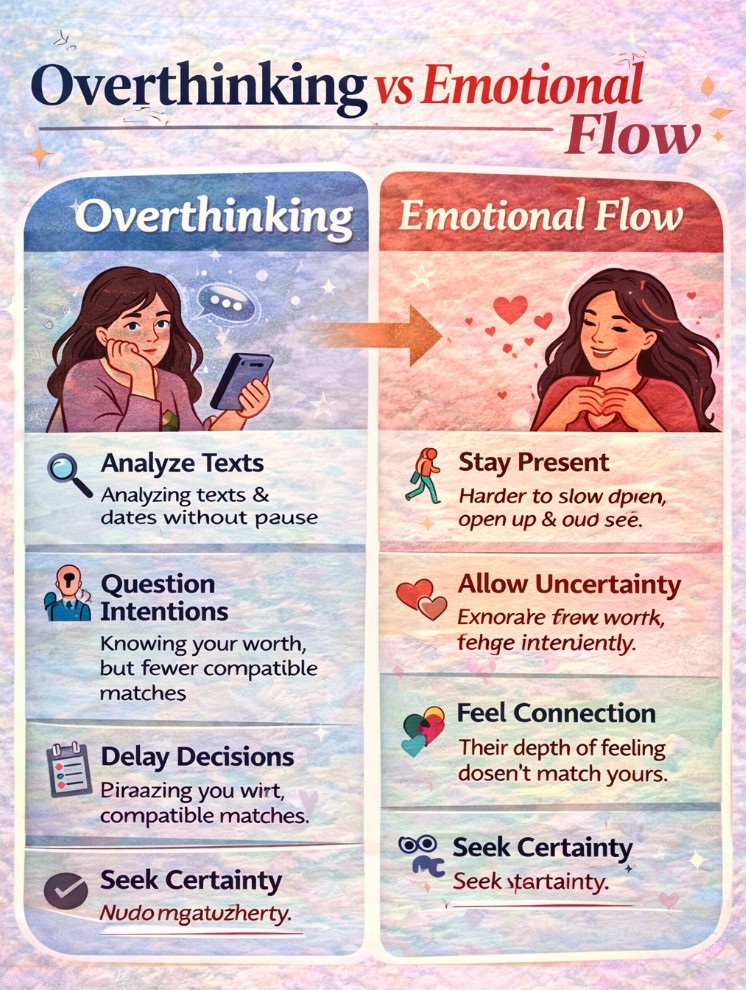
Smart women are excellent thinkers. In dating, that strength can override intuition.
When something feels off, intuition speaks quietly. It shows up as loss of ease or subtle misalignment. Instead of trusting it, many capable women explain it away. They assume they’re overthinking or being too sensitive.
Overthinking becomes a way to manage uncertainty. The mind tries to solve what the body already knows.
Intuition isn’t irrational. It’s pattern recognition beneath language. Trusting it doesn’t mean abandoning intelligence. It means letting intelligence support internal knowing.
Reflection Beyond Thinking
Insight alone doesn’t always break cycles.
Practices like journaling, therapy, and guided self-inquiry help move awareness out of the head and into emotional integration. They slow things down enough for meaning to settle.
Some people also explore symbolic or intuitive reflection to understand recurring patterns. Used responsibly, these tools aren’t about prediction. They’re about language for emotional experiences that don’t fit neatly into logic.
Instead of asking what’s wrong with yourself, ask what keeps repeating and why?
Going Through a Shift
One of the biggest shifts for capable women is stepping out of performance. Performance looks like showing up polished, composed, and fully together. Dating as a résumé. Impressive, but distant.
Presence allows uncertainty. It lets you not know. It invites curiosity instead of control. That can feel uncomfortable for women used to mastery, but it’s where intimacy actually forms.
Pausing instead of filling the silence. Admitting uncertainty instead of offering solutions. Letting someone meet the unfinished parts. It doesn’t get rid of compatibility, but it makes it more human.
What Good Dating Feels Like
Healthy and good dating for smart women feels like both people are giving. The curiosity goes both ways, interest is consistent, and emotional labor is shared. There is no need to ignore intelligence or to soften your presence for someone to pick you.
According to the Gottman Institute, emotional attunement and responsiveness matter far more than intensity or novelty in sustaining connection.
Healthy dating feels calm, not confusing, grounded, and not performative and chosen, not managed.
Rewriting the Story and Keeping Your Standards
When you are dating, struggling doesn’t mean that you are dumb, less discerning, or direct, but it means that you are recognizing patterns or replacing self-criticism. It means that you are being open, but you are keeping standards, and you are recognizing that difficulty can mean that you aren’t matched with the right person, and not that something is wrong with you.
Dating is less about evaluating what is going on and more about being aligned. Instead of asking if they like you, you ask if you function well together. Clarity takes over effort, and self-trust replaces self-blame.
Final Thoughts: Struggling Doesn’t Mean Weakness
Struggling with dating doesn’t mean that you are weak. It shows the difference between being capable and not worrying so much about structure.
A woman who is smart and capable isn’t too much; she is someone who is often mismatched with systems that choose consistency over chaos and clarity.
When you start to date again, you create a connection and restore your dignity. When you have more self-trust, dating is less about worrying about your worth and learning to recognize how great you are.
Frequently Asked Questions
1. Why do smart and capable women struggle with dating?
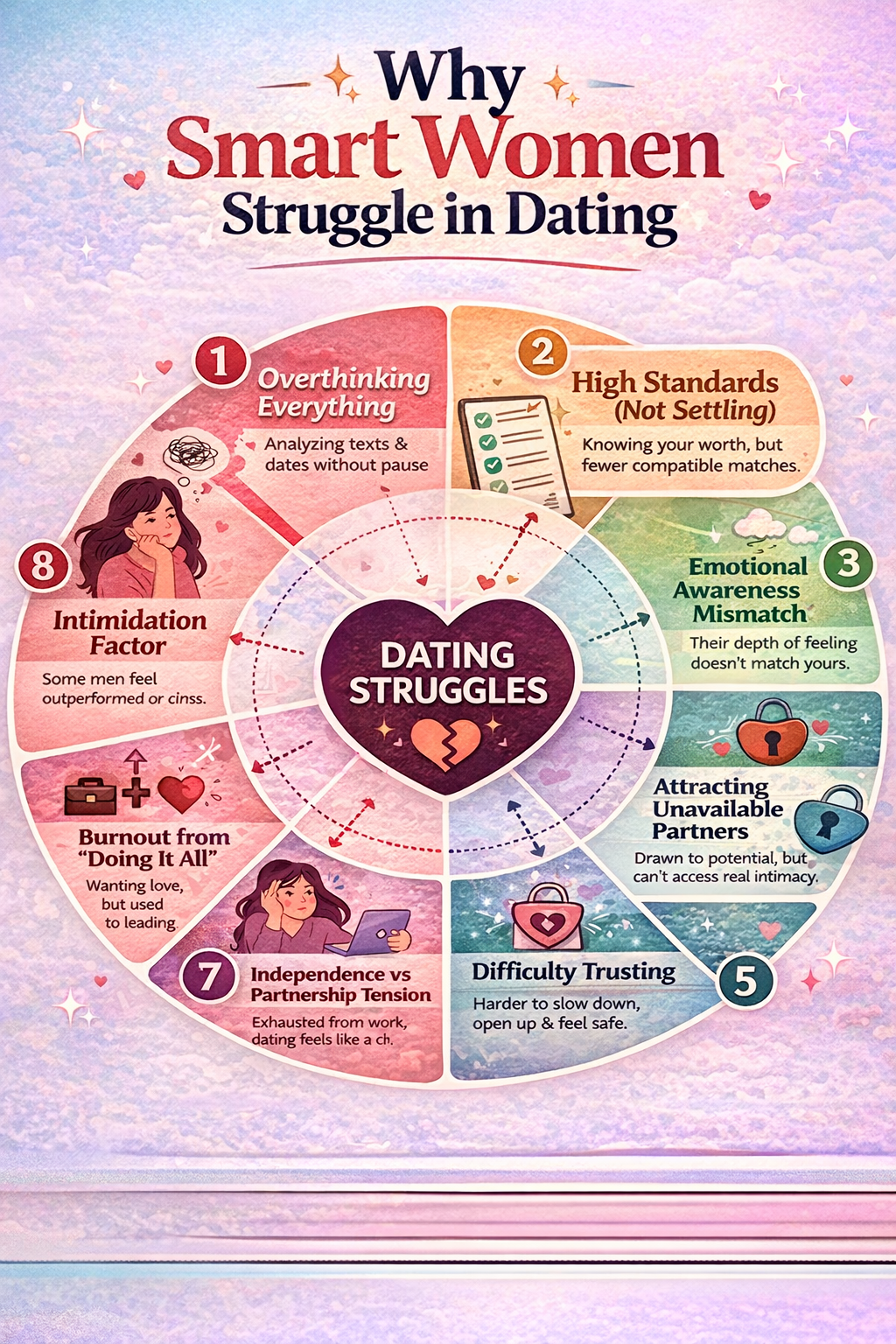
They often combine high self-awareness, independence, and strong standards, which can create fewer compatible matches and more complex emotional dynamics in dating.
2. Does being intelligent make dating harder?
Intelligence can lead to deeper analysis, higher expectations, and less tolerance for misalignment, which can slow down or complicate the dating process.
3. What role does overthinking play in dating struggles?
Overthinking can cause constant analysis of messages, behavior, and intentions, which can reduce emotional flow and create unnecessary doubt.
4. Are high standards a problem in dating?
High standards are not the problem, but rigid expectations without flexibility can limit opportunities for meaningful connection.
5. Why do emotionally unavailable partners seem common?
Patterns of attraction, familiarity, or unconscious dynamics can lead to repeated connections with emotionally unavailable individuals.
6. What is emotional awareness mismatch?
It happens when one person has deeper emotional insight or communication skills than the other, creating imbalance in understanding and connection.
7. Can independence affect dating success?
Strong independence can sometimes signal that a partner is not needed, which may affect how others approach or engage in the relationship.
8. Why do successful women feel dating burnout?
Balancing career, personal growth, and dating can be exhausting, especially when emotional effort is not equally matched.
9. What is the intimidation factor in dating?
Some partners may feel insecure or unsure when faced with confidence, intelligence, or success, which can affect their behavior or interest.
10. Why is trusting difficult in modern dating?
Past experiences, mixed signals, and inconsistent behavior can make it harder to feel safe and open in new connections.
11. How does analysis block emotional connection?
Constant evaluation can prevent being present, making it harder to experience natural emotional chemistry and flow.
12. Is it harder to find equal partners?
Finding someone with similar values, emotional maturity, and life direction can feel more challenging as standards and awareness increase.
13. Why do smart women struggle with vulnerability?
They may rely on logic and control, making it harder to fully open up emotionally without overthinking or self-protecting.
14. Can career success impact relationship dynamics?
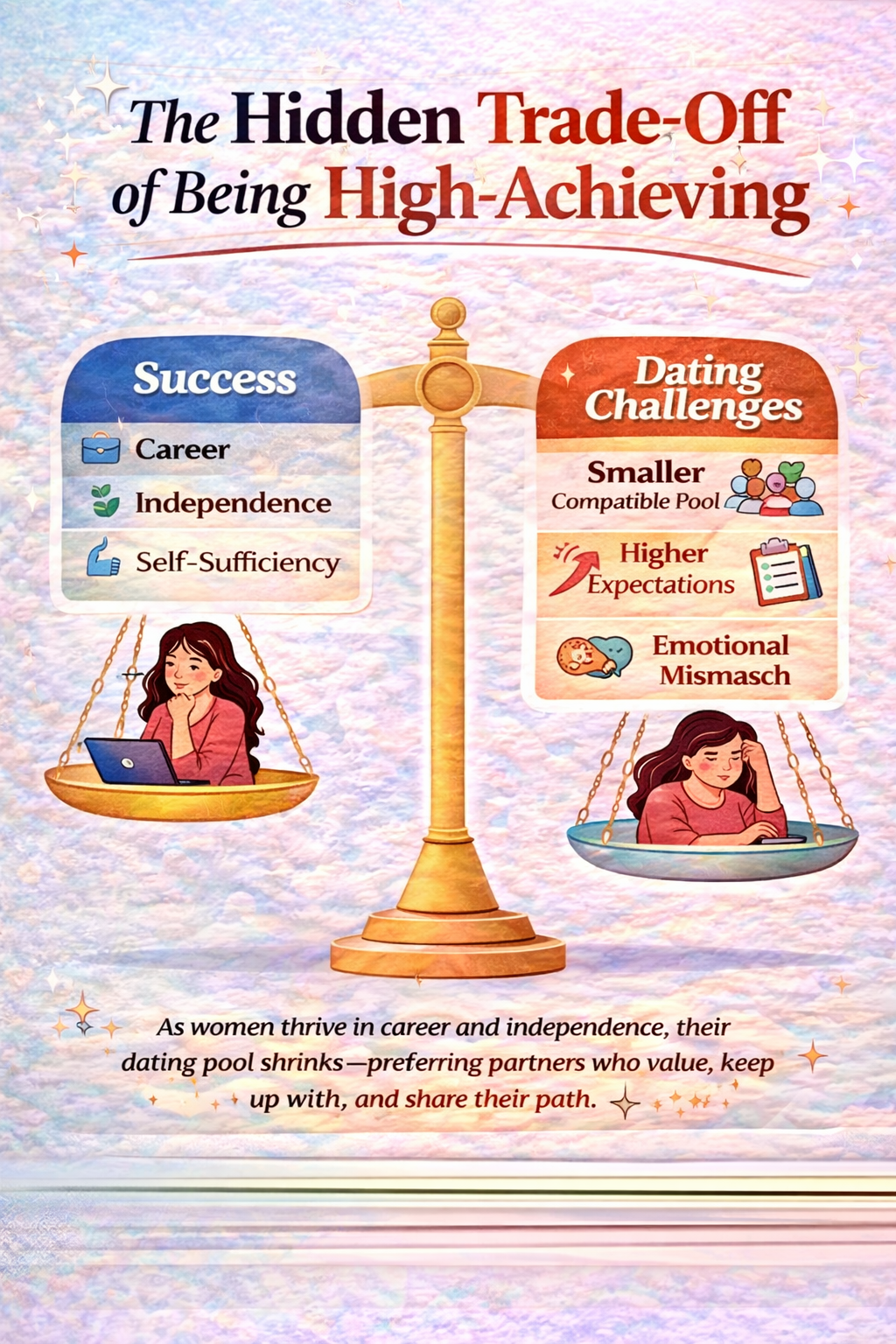
Yes. Success can shift expectations, roles, and compatibility, especially if partners are not aligned in mindset or values.
15. What is the independence vs partnership tension?
It is the balance between maintaining autonomy and allowing emotional closeness without feeling restricted or overwhelmed.
16. How can someone reduce overthinking in dating?
Focusing on present experiences, limiting assumptions, and allowing uncertainty can help create a more natural connection.
17. Why do dating patterns repeat?
Unconscious habits, beliefs, and emotional comfort zones can lead to similar relationship dynamics over time.
18. What does healthy dating feel like for smart women?
It feels calm, consistent, and emotionally balanced rather than intense, confusing, or overly analytical.
19. How can smart women improve dating experiences?
By balancing logic with emotional presence, choosing aligned partners, and staying open without overanalyzing every detail.
20. What is the key takeaway for dating as a capable woman?
The goal is not to lower standards but to stay aligned, trust your instincts, and allow connection to develop naturally.