

Updated
Strong feelings cannot tell you whether a relationship is safe. “Soulmate” describes a personal or spiritual meaning. A trauma bond describes an attachment that can develop within an abusive relationship. The useful starting point is how someone treats you, whether your choices are respected and whether you can seek support freely.
What does trauma bonding mean?
The National Domestic Violence Hotline explains trauma bonds as attachment to a partner whose abusive behavior is mixed with affection, reassurance or periods of calm. The person causing harm can also become someone you turn to for comfort. That combination can make the attachment difficult to understand or step away from.
Missing someone, sharing painful experiences or feeling anxious about a breakup does not, by itself, establish a trauma bond. Nor does an attachment-style label tell you whether a particular partner is abusive. Avoid diagnosing yourself from a list of feelings: describe the behavior you are concerned about to someone qualified to help.
Where soulmate and twin-flame language can mislead
You may find spiritual language meaningful without using it to decide what treatment you must accept. Feeling that someone is familiar, noticing coincidences or hearing a prediction from a reader does not establish that the person is safe, compatible or willing to build a relationship with you. Another person’s clear refusal still matters.
The Hotline identifies using a partner’s beliefs to control, shame or excuse harm as forms of spiritual abuse. Applied to soulmate language, a claim such as “you must endure this to complete our soul lesson” is a reason to examine the pressure being applied. It is not evidence that suffering is your assignment. A spiritual explanation does not transfer responsibility for someone’s harmful actions to you.
You do not have to settle the spiritual question before seeking help. “They threatened me when I tried to leave” is enough to discuss with an advocate. You need not prove that the relationship fits a particular label.
Look at behavior, including what happens after a no
Ordinary disappointment is different from intimidation or control. The Hotline’s warning signs of abuse include isolation, humiliation, restrictions on money or decisions, sexual pressure and threats. Physical injury is not the only reason to take a concern seriously.
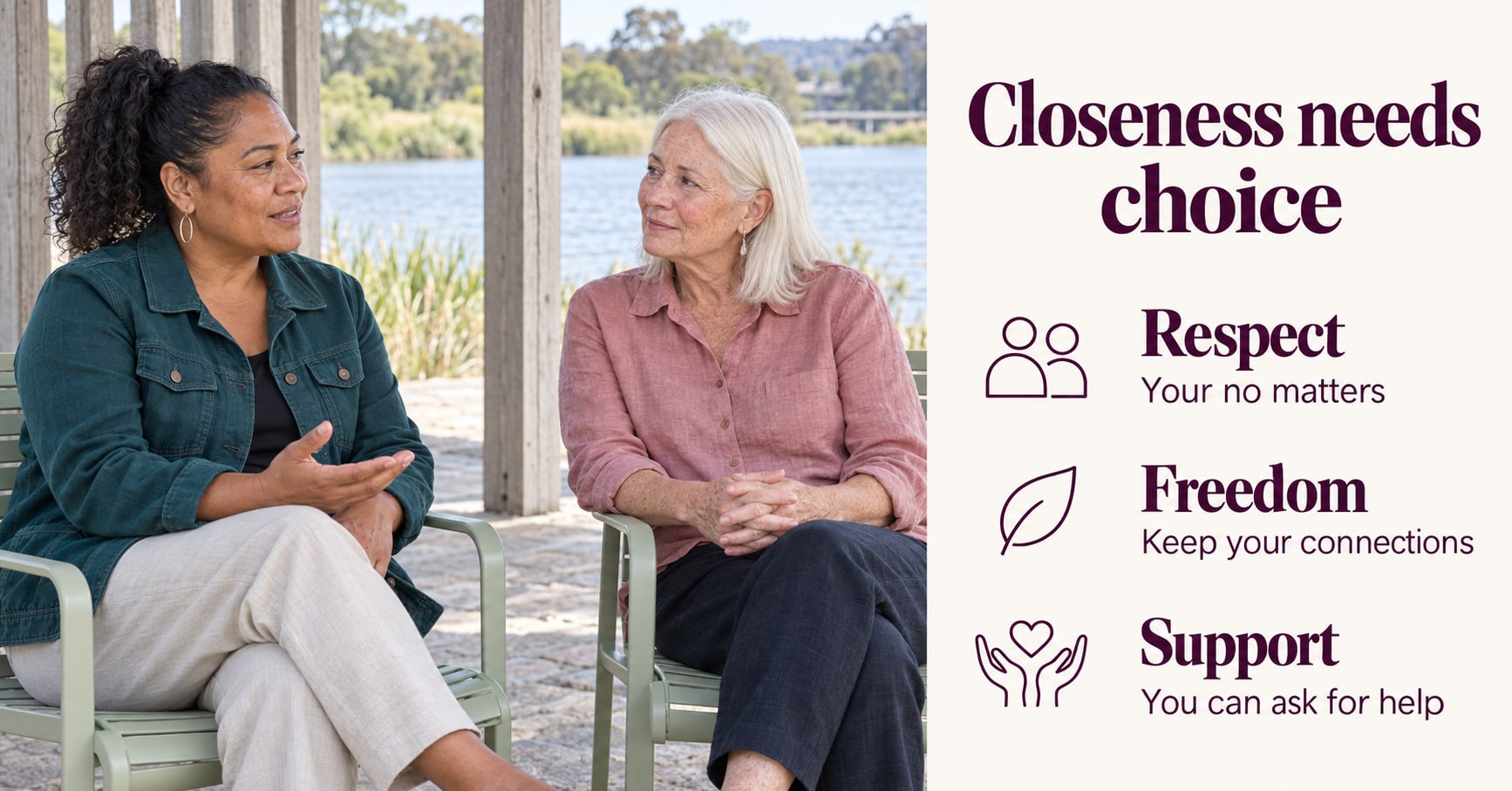
The cover’s three reminders provide a way to organise your observations. They are conversation prompts, not a scoring system or a test that can certify a relationship.
Respect: your no matters
Think about a recent refusal. Was there room for your answer, or were you pressured, threatened or punished for giving it?
Freedom: keep your connections
Consider whether you can stay in touch with people you trust and make everyday choices without being intimidated or isolated.
Support: you can ask for help
You can describe a concern privately to a trusted person or an advocate without first winning your partner’s agreement about what happened.
Do not deliberately provoke a reaction to test these questions. If you fear what might happen, talk through that concern with an advocate. For ordinary misunderstandings where you feel safe, our guide to text-message tone and assumptions helps separate someone’s actual words from guesses about their thoughts.
Why caring about someone does not make the harm your fault
People remain in abusive relationships for many reasons, including fear, money, housing, children and love. The Hotline’s explanation of why leaving can be complicated makes room for those realities. Staying, returning or feeling attached does not mean you agreed to be mistreated.
An apology or a warm weekend does not erase a threat. You can care about someone while taking what happened seriously. You also do not need to blame your childhood, prove that you attract certain partners or find a lesson in the experience before asking for support.
Choose support that fits the situation
If your concern is everyday relationship uncertainty and you feel safe expressing it, personal reminders and boundary phrases may help you put a request into words. They cannot make another person cooperate or provide protection from abuse.
When control, threats or fear are involved, individual support from a domestic-abuse advocate is a more suitable starting point than a joint conversation intended to fix communication. The Hotline’s guidance on trying to change an abusive partner advises against couples counseling in this situation. You cannot make another person stop their abuse by choosing the perfect words.
A practical place to start
A personal safety plan can consider your circumstances while you are in a relationship, preparing to leave or after separation. An advocate can help you think through options; an internet article cannot determine the safest next step for you.
In the United States: call the National Domestic Violence Hotline at 1-800-799-7233, text START to 88788, or use its live support options. If you are in immediate danger, contact local emergency services. Outside the United States, seek a domestic-abuse service in your country.
If someone may monitor your browsing or messages, consider reaching out from a safer device. Closing this page does not erase browsing records. You can ask for help even if you are unsure what to call the relationship.