


Putting Someone on a Pedestal
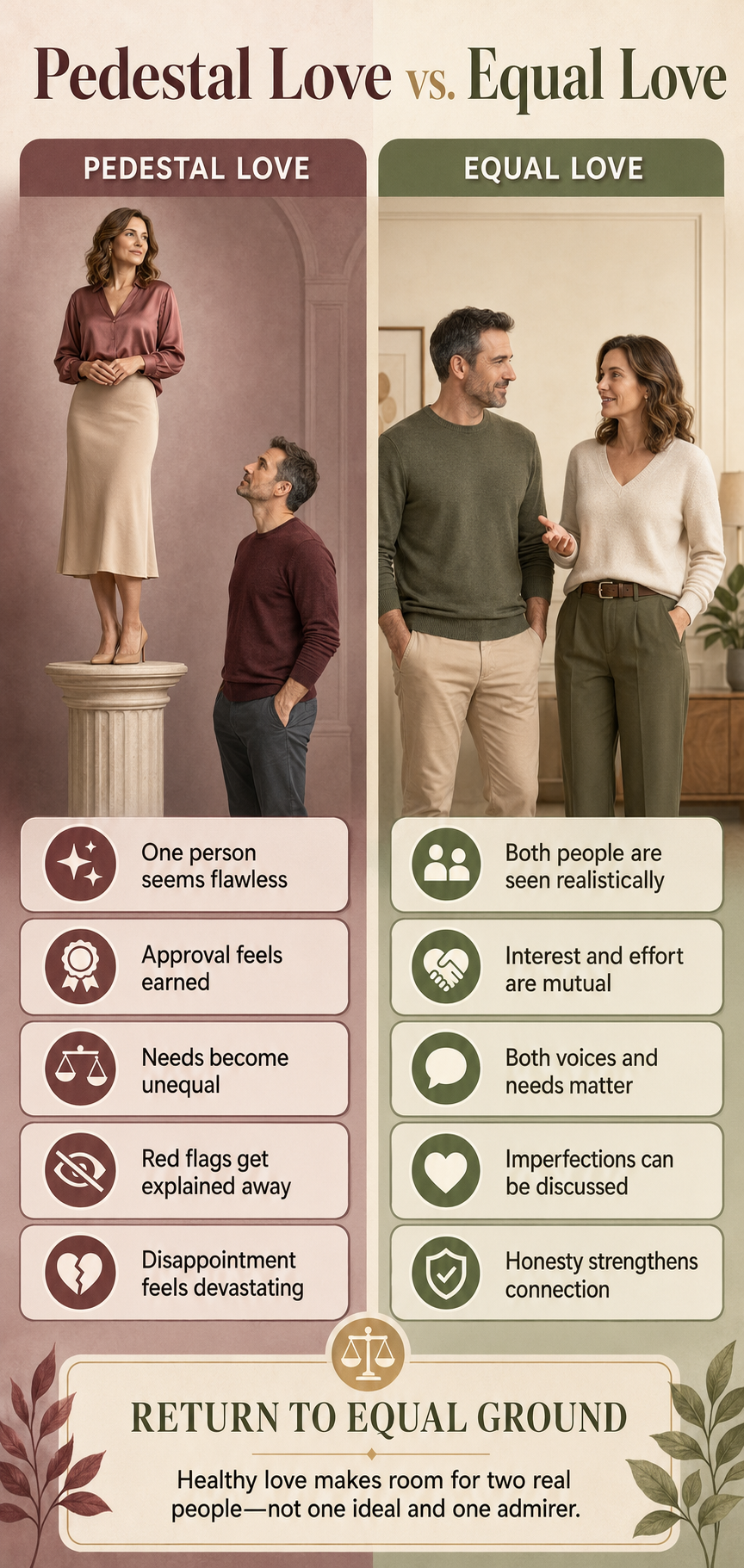
When you put someone on a pedestal emotionally, it means you put them above yourself psychologically. You start seeing them as more desirable, valuable, attractive, important, and harder to keep.
Even when you don’t realize this is happening, you’re slowly giving them your emotional power. Instead, wonder if you feel happy, respected, and emotionally safe with your partner. You start asking how you can make sure that they keep choosing you.
This change starts to create an unhealthy emotional hierarchy where getting their validation is what makes you feel your self-worth.
According to Verywell Mind on Attachment Styles research shows that individuals with anxious attachment tendencies are more vulnerable to idealizing their romantic partners and becoming emotionally dependent on having their validation.
1. A Lot of People Don’t Realize They’re Idealizing Someone
Most people don’t consciously decide to put someone on a pedestal. Usually, it slowly develops through deeper emotional patterns and insecurities. This might involve things like:
- Fear of rejection.
- Low self-worth.
- Emotional loneliness.
- Scarcity mindset.
- Fantasy projection.
- Fear of abandonment.
As time goes on, the relationship can slowly become emotionally unbalanced without someone fully realizing it.
2. Low Self-Worth Can Create Emotional Imbalance Quickly
If someone secretly feels like love has to be earned, they might automatically place romantic partners emotionally “above” themselves. This might involve things like:
- Feeling lucky someone chose them.
- Constantly fearing loss.
- Overworking for approval.
- Suppressing emotional needs.
- Tolerating poor treatment.
Instead of feeling emotionally equal inside the relationship, they slowly position themselves beneath the other person emotionally.
And when someone feels emotionally “above” you, anxiety usually increases because losing them feels tied to your self-worth.
3. Scarcity Often Makes Attraction Feel More Intense
Scarcity has a powerful emotional effect psychologically. When someone feels these things, it can be the brain assigning them to exaggerate emotional value:
- Hard to get.
- Emotionally inconsistent.
- Socially desired.
- Emotionally unavailable.
- Extremely attractive.
Unpredictability tends to increase emotional fixation because inconsistency creates stronger emotional attachment loops psychologically. That’s one reason emotionally unavailable relationships can feel emotionally addictive.
4. Sometimes People Fall in Love with the Fantasy
A lot of people become attached not only to who someone actually is, but to the fantasy of what they emotionally represent. This might involve projecting these things onto someone that they don’t fully know yet:
- Soulmate potential.
- Emotional safety.
- Future commitment.
- Idealized romance.
- Compatibility.
- Emotional depth.
As time goes on, the attachment can become more connected to imagined possibilities instead of emotional reality.
5. Fear of Rejection Often Creates Emotional Performance
When rejection feels emotionally devastating, a lot of people stop participating naturally in relationships and start performing for love instead. This might involve things like:
- Becoming overly accommodating.
- Avoiding conflict.
- Suppressing emotions.
- Trying to seem perfect.
- Abandoning boundaries.
- People-pleasing constantly.
The fear underneath usually sounds like:
- “If I disappoint them, I’ll lose them.”
The problem is that emotional self-abandonment usually weakens intimacy instead of strengthening it.
6. Chasing Approval Creates Anxiety Instead of Connection
Healthy relationships usually involve mutual emotional investment. But pedestal dynamics often create an imbalance where one person chases while the other simply receives attention. This might involve things like:
- Over-pursuing emotionally.
- Overexplaining.
- Overthinking constantly.
- Monitoring their behavior.
- Seeking reassurance repeatedly.
- Emotionally over-giving.
As time goes on, approval-seeking often replaces emotional confidence. And the truth is that validation-seeking energy usually weakens attraction instead of making it deeper.
7. Putting Someone Above You Makes Red Flags Easier to Ignore
When someone feels emotionally “above” you, standards often start collapsing quietly. You might excuse these things because preserving the connection that you have might feel more important than keeping yourself safe.
- Inconsistency.
- Breadcrumbing.
- Emotional unavailability.
- Poor communication.
- Lack of effort.
- Hot-and-cold behavior.
- Disrespect.
That’s one reason people sometimes stay in emotionally unhealthy relationships much longer than they should.
8. You Slowly Start Losing Your Authentic Self
One of the most damaging effects of pedestal dynamics is identity distortion. Instead of asking, “What feels true to me?” people might ask, “What version of me will keep them interested in me?
This might involve things like:
- Emotional suppression.
- Acting overly agreeable.
- Pretending to be “easygoing.”
- Hiding emotional needs.
- Trying to impress constantly.
But emotional performance usually weakens intimacy because people can hardly ever deeply connect with someone who feels emotionally guarded or approval-focused.
9. Anxiety Starts Taking Over the Relationship
When someone’s validation becomes tied to your self-worth, dating often becomes emotionally consuming. This might involve things like:
- Obsessing over reply times.
- Constantly checking your phone.
- Rereading conversations.
- Panicking over emotional shifts.
- Overanalyzing social media activity.
Your nervous system becomes hyper-focused on emotional security because your self-esteem starts depending on their emotional approval. That creates chronic emotional instability.
10. Confidence Usually Feels More Attractive Than Validation-Seeking
One uncomfortable truth about attraction is that people are generally more drawn to those who value themselves emotionally. Confidence often signals:
- Emotional security.
- Self-respect.
- Emotional maturity.
- Healthy boundaries.
- Emotional stability.
Validation-seeking often signals:
- Fear of abandonment.
- Emotional dependency.
- Insecurity.
- Lack of self-worth.
This doesn’t mean pretending to be emotionally detached.
It means remembering your worthiness in dating instead of outsourcing it to someone else’s approval.
11. One Mindset Shift Changes Dating Completely
One of the healthiest dating shifts is moving from:
- “How do I get chosen?”
to:
- “Is this person emotionally healthy enough for me?”
That single shift changes:
- Your standards.
- Your boundaries.
- Your emotional energy.
- Your confidence.
- Your dating choices.
- Your tolerance for unhealthy behavior.
Healthy dating isn’t about convincing someone to love you. It’s about deciding whether the relationship genuinely aligns with your emotional needs and long-term well-being.
12. There Are Usually Signs You’re Putting Someone on a Pedestal
Some common signs might involve things like:
- Constantly worrying about losing them.
- Their attention controls your mood.
- Ignoring your own emotional needs.
- Feeling like you must earn love.
- Overanalyzing everything.
- Tolerating inconsistency.
- Feeling less authentic around them.
A lot of times, emotional pedestal dynamics create anxiety instead of emotional safety.
13. Rebuilding Your Relationship with Yourself Changes Everything
One of the healthiest ways to stop idealizing someone is to reconnect with yourself emotionally again. This might involve things like:
- Friendships.
- Hobbies.
- Confidence-building activities.
- Self-care routines.
- Emotional boundaries.
- Goals.
- Personal routines.
Healthy relationships should complement your identity instead of replacing it.
14. You Don’t Need to Perform to Be Loved
You don’t need to:
- Become perfect.
- Suppress emotions.
- Constantly impress someone.
- Over-function emotionally.
- Pretend to be endlessly easygoing.
Healthy people usually connect more deeply with authenticity than performance. People can feel when someone is emotionally real.
15. Internal Validation Creates Emotional Stability
One of the healthiest emotional shifts is learning how to validate yourself emotionally instead of depending completely on external approval. Internal validation sounds more like:
- “I know my worth.”
- “I deserve consistency.”
- “I don’t need to earn basic respect.”
- “Someone’s inability to choose me doesn’t define my value.”
As time goes on, this creates stronger emotional stability, healthier boundaries, and much healthier relationship choices overall.
Things to Ask When Dating
Instead of asking yourself if your partner likes you, here are some things you should ask:
- How do I feel about myself around them?
- Do they bring emotional peace or emotional anxiety?
- Can I fully be myself?
- Are they emotionally available?
- Do they show consistency?
- Do they respect my boundaries?
- Are we genuinely compatible beyond chemistry?
These kinds of questions can change dating from you validation seeking to seeing if you are compatible.
What Healthy Love Feels Like
Some people think that emotional anxiety is love because emotional inconsistency creates a strong intensity. The truth is, though, that healthy love feels:
- Grounding.
- Safe.
- Stable.
- Consistent.
- Secure.
Healthy love doesn’t feel:
- Chaotic.
- Obsessive.
- Uncertain.
Intimacy grows stronger when there is emotional safety and not imbalance.
Final Thoughts: Putting Someone on a Pedestal
When you put someone on a pedestal, it doesn’t create a deeper love, but it creates an imbalance. Healthy relationships happen when two people are equal with one another, not when one shrinks while the other one becomes idealized.
Good dating energy isn’t about asking someone to choose you, but it’s about knowing your worth and seeing if the relationship deserves your emotional investment as well.
Once you stop chasing validation and honor your own value, dating becomes more real, less anxious, and healthier emotionally and physically.